
Utica Shale: Appalachian Basin Oil & Gas Geology and Activity
Tuesday June 21, 2016
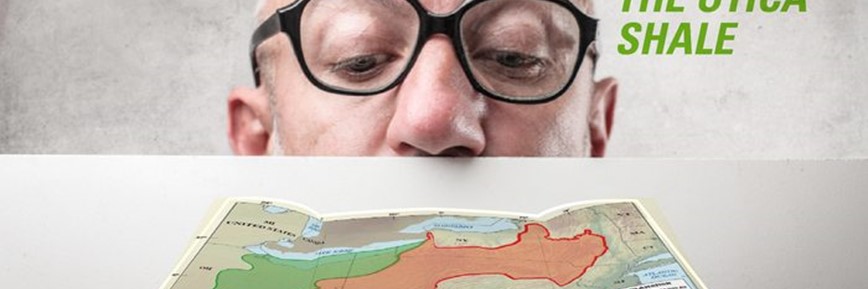
Since there hasn’t been much news out of Ohio this week, I thought it would be a good time to revisit the Utica Shale.
Wedged between the Cincinnati Group and the Black River Group formations, deep below Ohio, Pennsylvania, West Virginia and even parts of Canada, lies the Middle Ordovician stratigraphical unit we have come to know as the Utica Shale.
Utica Shale Geology
The Ordovician came on the heels of the mass extinction event that ended the Cambrian period, and the Middle Ordovician (the tail end of a greenhouse cycle that extended back well into the Cambrian) was notable for high sea levels and marine temperatures that are assumed to be ~113 degrees Fahrenheit. Laurentia, the “continental craton” that forms the ancient geological core of the United States, was one of the 4 major landmasses in play (along with Gondwana, Balticia and Siberia). This map of The United States superimposed with the Middle Ordovician version of Laurentia shows a substantial basin stretching across much of our area of interest. This hot marine bed encouraged an explosion and accumulation of macro algae and other simple life forms that, 460 million years later, have become the hydrocarbon focus of this blog post.

Today’s Appalachian Basin Oil & Gas
Mostly when we talk about Oil & Gas in the Northeast, we talk about the huge resource of dry gas that unconventional E&P has brought online, and for good reason. The unbelievable growth of natural gas production has turned east coast LNG import facilities into LNG export facilities, and, by supplanting coal with much cleaner burning Natural Gas, have made the USA the leader in lowering CO2 emissions. Most of this dry gas comes from the mighty Marcellus Shale, and early unconventional exploration in the Utica Shale was also focused on the dry gas resource.
However, current E&P in the Utica is focused more on the liquids rich por...