
“Human-On-A-Chip” Technology Could Replace Animal Testing
Monday July 4, 2016
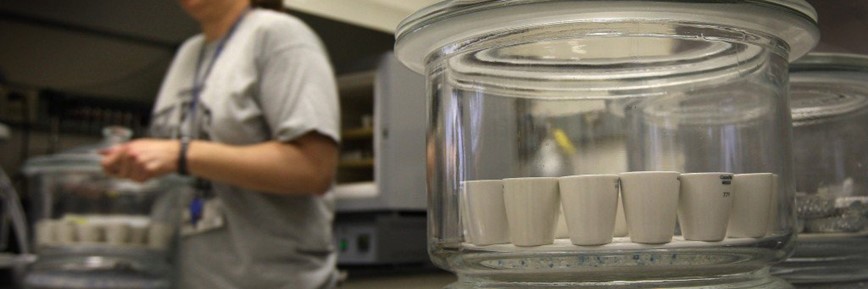
Developing new prescription drugs and antidotes to toxins currently relies extensively on animal testing in the early stages. That is not only expensive and time consuming, but it can also give scientists inaccurate data about how humans will respond to such agents.
But what if researchers could predict the impacts of potentially harmful chemicals, viruses, or drugs on human beings without resorting to animal or even human test subjects?
To help achieve that goal, scientists and engineers at Lawrence Livermore National Laboratory are developing a human-on-a-chip,†a miniature external replication of the human body, integrating biology and engineering. The team is combining microfluidics (networks of tiny tubes and channels) and multi-electrode arrays (devices that connect neurons to electronic circuitry).
The project, known as iCHIP (in-vitro Chip-based Human Investigational Platform), reproduces four major biological systems: the central nervous system (brain), peripheral nervous system, the blood-brain barrier, and the heart.
It's a testing platform for exposure to agents whose effects are unknown to humans,†said LLNL engineer Dave Soscia, who co-leads development of the brain-on-a-chip†device used to simulate the central nervous system. If you have a system that is engineered to more closely replicate the human environment, you can skip over the really lengthy process of animal testing, which doesn't necessarily give us information relevant to humans.â€
The iCHIP team is focusing its efforts on the brain, where they're looking to understand how neurons interact with each other and react to chemical stimuli such as caffeine, atropine (a drug used to treat poisonings and cardiac arrest), and capsaicin, the compound that gives chili peppers their hotness, as well as chemical agents in the Lab's Forensic Science Center.
Unique to the iCHIP platform is combining multiple brain cell types on the same device without barriers between those regions. To study the brain, primary neurons are funneled or seeded†onto a microelectrode array device, which can accommodate up to four brain regions (such as the hippocampus, thalamus, basal ganglia, and cortices). After the cells grow, a chemical (atropine for example) is introduced, and the electrical activity from the neurons is recorded.
The idea is that we can look at network-wide effects across dif...